Custom notepads are a versatile and cost-effective way for businesses to boost visibility at events through practical, branded stationery. From capturing leads and providing schedules to enhancing sustainability and staff presentation, they offer lasting impact across a wide range of event strategies.
Printed personalised notebooks remain one of the most effective and practical promotional tools available. They are affordable, highly visible, and offer long-lasting brand exposure well beyond the event. In a world dominated by digital tools and apps, you might wonder if printed notepads still have a place at events and trade shows. The answer is yes. This article explores 15 impactful ways to use custom notepads to attract attention, encourage interaction, and make a memorable impression on your audience.
1. Capture Leads with Branded Notepads
- Print QR codes linking to landing pages or sign-up forms.
- Include perforated tear-off sections for attendees to provide contact details.
- Encourage participation in surveys or competitions printed directly on the pages.
2. Enhance Workshops with Pre-Filled Notepads
- Add session outlines, speaker bios, or discussion points.
- Provide space for personal notes and questions.
- Help attendees stay organised and engaged.
Products like wirobound notepads and glued notepads are particularly useful here, depending on the format and audience.
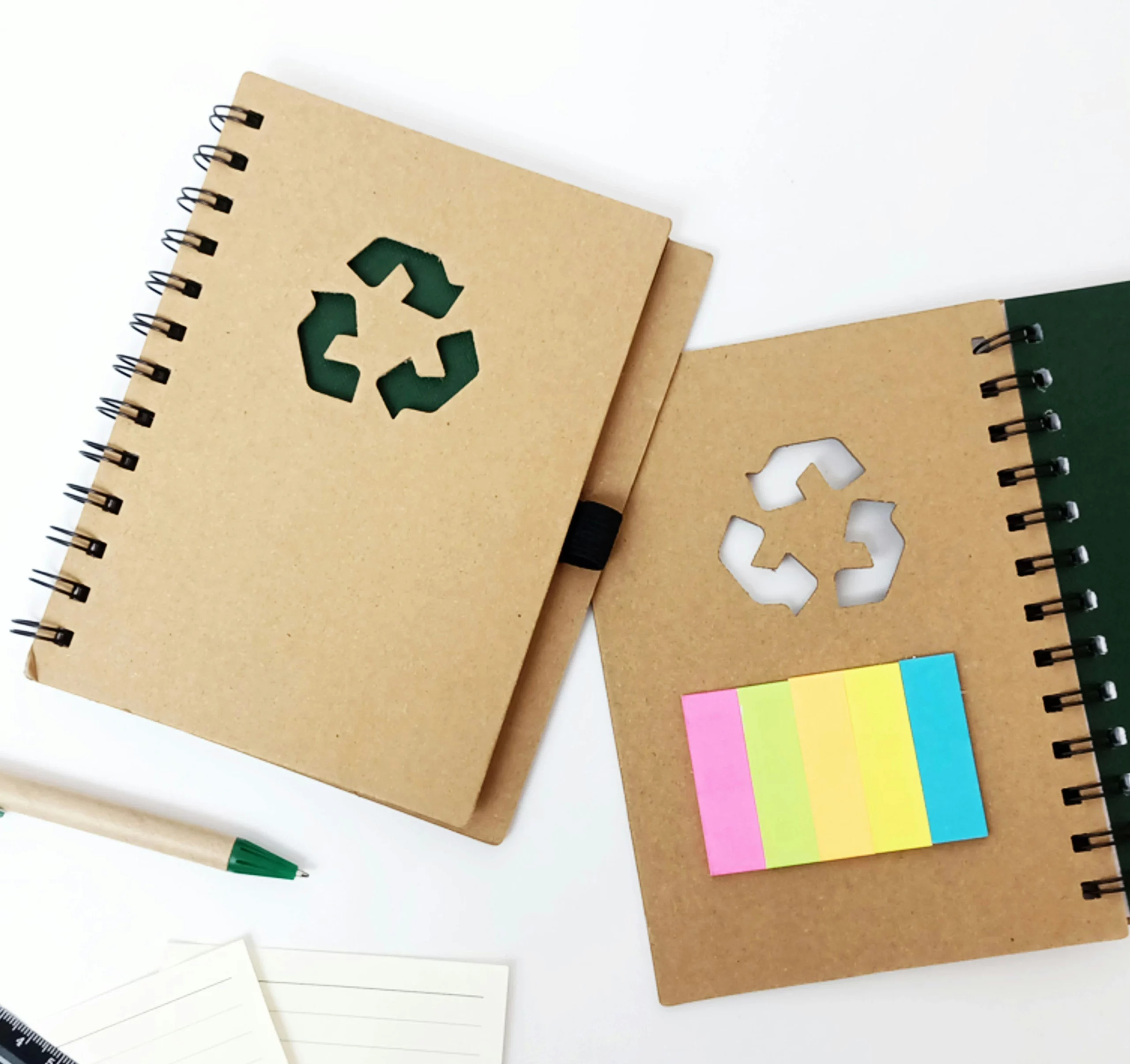
3. Promote Sustainability with Eco-Friendly Pads
- Use recycled paper and vegetable-based inks.
- Include a short note on your brand’s environmental values.
- Appeal to eco-conscious attendees.
If you’re looking to align with eco goals, explore our express products range for fast-turnaround sustainable printing options.
4. Offer Personalised Notepads for VIPs and Speakers
- Include names, company roles, or custom messages.
- Add a personal touch that shows appreciation.
- Create a practical and memorable gift.
Consider offering specific notepads tailored to VIPs, speakers, or high-value attendees to increase retention.
5. Add Gamification Elements to Boost Engagement
- Feature branded puzzles, bingo sheets, or scavenger hunt tasks.
- Include spaces for collecting stamps or stickers at different stands.
- Drive footfall and increase interaction.
6. Encourage Creativity with Sketch-Friendly Notepads
- Provide blank or grid pages for drawing and brainstorming.
- Appeal to designers, marketers, and creative thinkers.
- Display selected sketches to create buzz around your booth.

7. Gather Insights with Feedback-Focused Notepads
- Include prompts like “What did you enjoy most today?”
- Provide space for comments, suggestions, or ratings.
- Use detachable pages to make feedback collection simple.
Using formats like DL custom notebooks makes these compact and easy to distribute in feedback zones.
8. Share Branding Space with Event Partners
- Feature logos or messages from sponsors alongside your own.
- Reduce costs while broadening exposure.
- Maintain a clear visual hierarchy to preserve brand identity.
9. Provide Pocket-Sized Notepads for Convenience
- Choose compact formats that fit into bags or pockets.
- Ideal for fast-paced events with lots of movement.
- Increases the chance of repeated use.
A6 custom notebooks are the perfect size for giveaways and on-the-go note-taking.
10. Combine Notepads with Event Schedules
- Print agendas, maps, and session times inside the pad.
- Help attendees plan their day without checking devices.
- Keep your brand in view from morning to evening.
11. Add Custom Notepads to Swag Bags
- Include branded notepads in attendee welcome packs.
- Pair with pens for a professional and practical giveaway.
- Useful items are more likely to be kept and used again.
A5 custom notebooks are an ideal mid-size option for inclusion in swag bags.
12. Equip Your Team with Branded Notepads
- Print key messages, FAQs, or product features.
- Help staff stay consistent when speaking to visitors.
- Demonstrate professionalism and preparation.
13. Print Multilingual Versions for International Events
- Offer bilingual or multilingual designs.
- Support inclusivity and ensure understanding.
- Useful for trade shows that attract global participants.
14. Add Industry Tips and Trivia for Extra Value
- Include productivity hacks, quick facts, or quotes on each page.
- Make the notepad a talking point and reference tool.
- Encourage attendees to use the pad beyond the event.
Need help deciding whether printed notepads are right for your event? Learn more.
15. Reinforce Your Message with Post-Event Details
- Use the back cover to share contact information and follow-up links.
- Include QR codes for downloading slides, photos, or materials.
- Keep your brand in the hands of attendees after the show.
For more practical applications, A4 custom notebooks offer ample space for post-event content.
Conclusion: Make Custom Notepads Work for Your Brand
Custom notepads offer much more than blank pages. When designed with purpose and creativity, they become a valuable marketing asset. Whether you are looking to capture leads, share useful content, or support your team, printed notepads can make a lasting impression.
Call to Action: Planning your next trade show or corporate event? Think about how custom notepads can help you connect with attendees, strengthen your message, and remain front of mind. Choose a design that reflects your brand and aligns with your event goals. Survey: 67% of Small Businesses Use Custom Notepads for Brand Recall
Eco-friendly notepad printing helps reduce environmental impact by using recycled materials, biodegradable components, and non-toxic inks while maintaining professional quality. Choosing certified sustainable options not only supports the planet but also enhances brand reputation and long-term cost efficiency.
Eco-friendly notepad printing is no longer a niche trend. It is a practical, responsible choice that helps reduce environmental impact while supporting ethical business practices. This guide covers what makes a notepad eco-friendly, the materials involved, the benefits of sustainable notebook printing, and how to make informed choices.
What Makes a Notepad Eco-Friendly?
An eco-friendly notepad minimises harm to the environment throughout its lifecycle. Essential features include:
- Recycled or responsibly sourced paper with a high post-consumer waste content, ideally 70% to 100%
- Non-toxic inks such as vegetable-based or soy inks that are biodegradable and emit fewer pollutants
- Biodegradable components for covers, binding, and glue that break down safely over time
- Minimal or plastic-free packaging to reduce waste and improve recyclability
Some eco notepads are available as express products, making it easier to meet tight deadlines without compromising sustainability.
Sustainable Materials in Eco Notepad Printing
Selecting the right materials is key to eco-friendly printing. Common sustainable options include:
- FSC-certified or PEFC paper from responsibly managed forests
- Recycled paper that conserves resources and uses less energy during production
- Eco inks such as soy or vegetable-based options that reduce volatile organic compounds (VOCs)
- Binding and cover materials like cardboard, kraft paper, or hemp thread instead of plastic-based components
PrintReleaf reports that switching to vegetable-based inks can reduce VOC emissions by up to 70%.
For more niche uses, you can explore specific notepads designed to suit targeted functions or industries.
Why Choose Eco-Friendly Notepads?
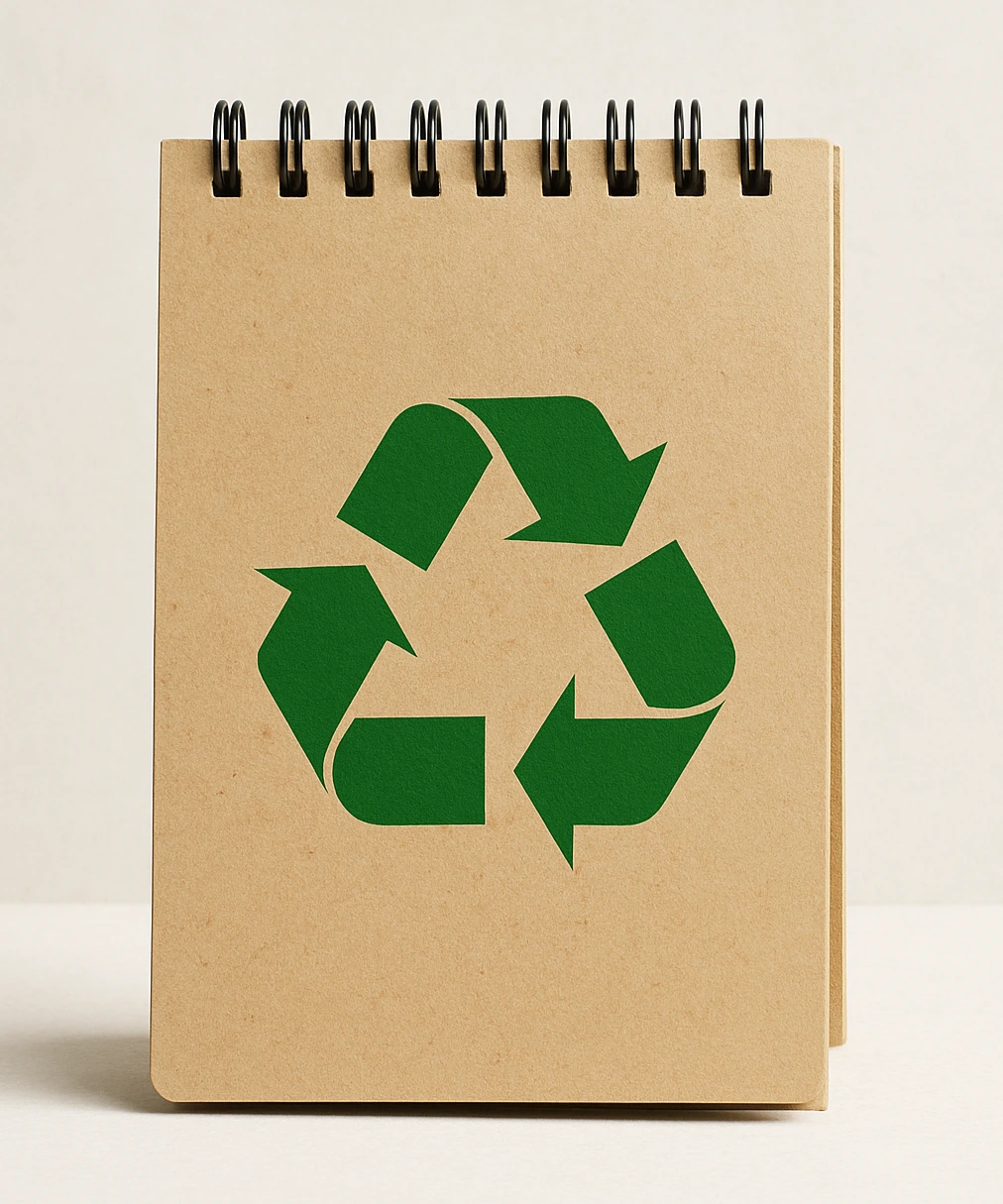
Eco-friendly notepads offer clear advantages for both the planet and your brand:
- Lower carbon footprint due to reduced energy use and emissions
- Less landfill waste from compostable or recyclable materials
- Better brand image by aligning with consumer values on sustainability
- Long-term savings through waste reduction and potential tax incentives
Whether you’re choosing wirobound notepads for professional settings or glued notepads for simple promotional giveaways, eco options are widely available.
Recognising Trusted Eco Certifications
Verifiable certifications are crucial when selecting eco notepads or print services. Look for:
- FSC (Forest Stewardship Council) to confirm responsible forestry
- PEFC (Programme for the Endorsement of Forest Certification), another respected forestry standard
- EU Ecolabel to confirm compliance with strict environmental and safety criteria
Avoid vague or unverified claims. Always check for official certification labels and ask your supplier for documentation.
How Eco-Friendly Notepad Printing Works
Sustainable printing methods include:
- Choosing materials such as recycled paper, non-toxic inks, and biodegradable binding
- Preparing eco inks with low-emission solvents
- Using energy-efficient machinery throughout the printing process
- Applying plastic-free finishing touches with natural or recycled materials
- Distributing via low-carbon transport or offsetting emissions through certified schemes
Some UK printers even operate entirely on renewable energy. Digital vs. Offset Printing for Notepads: Pros and Cons explains more about how these methods compare.
What to Know Before Buying Eco Notepads
Before making a purchase, consider the following:
- What percentage of recycled paper is used?
- Are the inks vegetable-based or low in VOCs?
- Is the product certified by bodies like FSC, PEFC, or EU Ecolabel?
- Is the packaging recyclable or plastic-free?
- Are custom branding options available without sacrificing sustainability?
You can find eco options across all sizes, from A6 custom notebooks for portability to larger A3 custom notebooks for presentations.
Common Questions About Eco Notepad Printing
Are recycled notepads as good as regular ones?
Yes. Recycled paper now matches virgin paper in strength and writing quality.
Is sustainable printing more costly?
It can be slightly more expensive upfront, but many organisations see cost benefits over time.
Can I add my logo to eco notepads?
Yes. We offer custom branding using sustainable methods.
What recycled content should I look for?
Aim for 70% or more, with 100% post-consumer content being the best option.
Conclusion: Choose Sustainability with Confidence
Eco-friendly notepad printing supports a greener, more responsible future. By understanding the materials, processes, and certifications involved, you can make choices that benefit both the environment and your business. Look for certified suppliers, such as Printed Notepads, ask detailed questions, and invest in products that meet your sustainability goals.
Start today by choosing certified eco notepads and take a meaningful step toward reducing your environmental footprint. If you’re looking for creative inspiration, here’s a helpful article: 15 Creative Ways to Use Custom Notepads at Events and Trade Shows
Choosing the right notepad involves understanding paper weight, binding style, and size to match your specific writing or organisational needs. Features like perforated pages, FSC-certified paper, and custom sizing options help improve usability while supporting sustainability and brand consistency.
Not all notepads are created equally. Whether you’re scribbling meeting notes, journalling, sketching, or planning your day, the structure of your notepad can have a big impact on how effective and enjoyable it is to use. This guide breaks down the essential components that define a high-quality notepad, including paper type, binding style, size, and useful features. If you’ve ever wondered why some branded notepads feel better to write on than others, you’ll find everything you need to know right here.
Best Paper for Notepads: Understanding Weight, Finish and Performance
The type of paper used in a notepad plays a key role in the writing experience. It affects how the page feels under your pen or pencil, and whether ink will bleed, smudge or show through.
Paper weight (GSM):
- 70 to 90gsm: Suitable for casual note-taking or use with ballpoint pens. Common in school exercise books.
- 90 to 120gsm: Offers a more premium feel with better resistance to ink bleed. Ideal for journalling or express products like quick turnaround notepads.
- 150 to 160gsm: Heavier paper often found in sketchbooks or A3 custom notebooks. Excellent for fountain pens or markers.
Finish and texture:
- Uncoated paper is more absorbent and better for handwriting.
- Matte or silk-coated paper gives a smoother surface and vibrant colour reproduction, but may not suit every pen.
Opacity:
Higher opacity paper helps prevent ghosting and is especially useful for writing on both sides of the page.
Notepad Binding Options: What to Choose and Why It Matters
Binding affects how a notepad functions day to day. It determines how flat it lies, how easily pages turn, and how durable the pad will be.
Spiral and Wirobound Binding:
- Allows the pad to lie completely flat
- Easy to fold pages back, ideal for sketching and fieldwork
Glued Notepad Binding (PVA or PUR):
- Perfect binding gives a clean, professional appearance
- PUR glue is more durable than standard adhesives
- Suitable for thicker pads of 40 pages or more
Saddle-Stitch Binding:
- A budget-friendly choice for smaller notebooks up to 60 pages
- Uses staples down the middle fold, though it doesn’t always lay flat
Comb Binding:
- Common in office settings
- Pages can be added or removed with ease
Case Binding (Hardcover):
- Offers strength and long-term durability
- A good choice for archiving notes or gifting
Choose your binding based on how you plan to use your notepad and how often it needs to open flat or stay intact over time. For niche applications, consider offering specific notepads tailored to customer needs.
Choosing the Right Notepad Size: A4, A5 and Pocket Options
The size of your notepad should suit your purpose and lifestyle. Whether you need something compact or a spacious writing surface, the right size makes all the difference.
Popular notepad sizes in the UK include:
- A4 (210 × 297 mm): Ideal for detailed notes, diagrams, or office paperwork
- A5 (148 × 210 mm): A portable, everyday option for journalling and general use
- DL (99 × 210 mm): A slim, compact option often used for list-making or desk pads
- A6 pocket size (approximately 105 × 148 mm): Great for jotting quick notes on the move
Traditional UK sizes like 178 × 229 mm are still used in some school and office notepads, although A-series sizes have become the standard.
Practical Notepad Features That Make Writing Easier
The best notepads include simple features that improve usability and convenience. Look for:
- Elastic bands to keep pages secure
- Pen holders attached to the cover
- Perforated pages or tear-off corners for neat removal
- Page formats such as lined, dotted, grid, or blank
- Recycled or FSC-certified paper for environmentally conscious buyers
These features add to the usability and comfort of regular notepad use. Learn more.
Examples of Well-Designed Notepads That Work
Some notepads consistently stand out thanks to the way they combine quality materials with thoughtful design. For instance:
- A5 hardback journals using 80gsm acid-free paper, with elastic closures and ribbon markers
- Spiral-bound pads featuring high-opacity 90gsm paper, perfect for fast-paced writing
- Dot-grid bullet journals with 160gsm paper, designed for artistic layouts or daily planning
What makes them effective is that their specifications match the user’s intended purpose. Read more here: Why Aren’t My Printed Notepads Turning Out Right? 7 Common Mistakes

How to Choose the Right Notepad for Your Needs
Before buying your next notepad, consider the following:
- What will it be used for: notes, journalling, sketching, or planning?
- Will you carry it around, or keep it at a desk?
- Do you prefer lined, dotted, grid, or blank pages?
- Is bleed-through resistance important to you?
- Do you need to remove pages easily or archive your notes?
Your answers will guide your decision on paper quality, binding type, and size.
Final Thoughts
A well-made notebook supports how you write, plan and create. By understanding the importance of paper weight, binding options, and sizing, you can find one that fits your needs perfectly. Use this guide to help you select a notepad that suits your work, studies, or creative process.
Ready to find a notepad that ticks all the boxes? Explore your options and choose one that works best for you.
Printed notepads are produced through a detailed process involving custom design, sustainable materials, and a variety of binding and sizing options tailored to branding and usability. Their ongoing appeal in 2025 stems from their practicality, marketing effectiveness, and the tactile experience they offer in an increasingly digital world.
In an age of digital dominance, branded notepads offer something unique. In 2025, these compact, customisable tools remain a practical staple in both professional and creative environments. This article explains how printed notepads are made—from paper choice to binding—and explores why they continue to add value for UK businesses and customers alike.
The Process of Making Printed Notepads
Printed notepads are crafted through a sequence of steps that allow full personalisation while maintaining production efficiency. The process starts with selecting the paper type and ends with cutting and binding the final product. For time-sensitive projects, many businesses choose express products to ensure faster turnaround.
- Design setup using brand logos, grid layouts, or messaging
- Glued notepads, wire-bound, or stapled bindings
- Size selection—common options include A4, A5, A6, and custom cuts
- Finishing options such as specific notepads tailored to niche sectors
Once printed, the sheets are assembled, bound, and trimmed. Many UK printers use recycled materials and sustainable inks to support eco-conscious practices.
Key Reasons Printed Notepads Remain Relevant
- Distraction-free productivity: Handwriting allows clearer thought without screen fatigue
- Accessibility: No batteries, apps, or updates required
- Memory reinforcement: Handwritten notes improve learning and recall
- Marketing impact: Branded notepads offer ongoing visibility
- Low cost, high return: Ideal for promotions, events, or welcome kits
Durable options like wirobound notepads are ideal for teams or client use where longevity matters.

What Goes Into the Design?
Designing a notepad involves more than adding a logo. The structure, layout, and usability all contribute to how well the notepad supports its intended use, whether it’s for internal tasks, external promotion, or industry events.
Design options typically include:
- Brand colours and fonts
- Contact information and taglines
- Grids, checkboxes, or blank layouts
- Cover design with optional protective layers
High-quality pads stay in use longer, keeping your brand in view. Unlike single-use marketing materials, printed notepads become part of someone’s daily routine.
Sustainable Materials and Eco Printing
Many UK businesses now request printed notepads made with ethical materials and processes. Printers are meeting this demand with greener solutions, without sacrificing quality or style.
Common sustainable choices include:
- FSC-certified or recycled paper
- Vegetable-based and soy inks
- Plastic-free and compostable bindings
- Carbon-neutral delivery options
Eco-focused businesses can align their branded materials with their values. For a detailed guide, see The Anatomy of a Perfect Notepad: Paper, Binding, Size & More.
Handwritten Notes vs Digital Devices
- Better retention: Handwriting encourages slower, more deliberate thinking
- Screen breaks: Physical writing helps reduce tech overload
- Durability: Notepads aren’t vulnerable to crashes or battery loss
- Hybrid use: Notes can be scanned or photographed for archiving
Who Uses Them and Why?
Notepads are used by professionals, educators, creatives, and administrators. They’re also ideal for events, conferences, and onboarding packs.
Common users include:
- Consultants: For strategy sessions and fieldwork
- Schools and training providers: For note-taking and course distribution
- Designers: For sketching, drafting, and visual exploration
- Retailers: For packing notes, vouchers, and thank-you messages
- SMEs: For low-cost branded visibility
Popular formats range from A3 custom notebooks for large-scale planning to DL custom notebooks for compact giveaways.
Choosing the Right Notepad for Your Business
Choosing the right notepad depends on your brand goals, audience, and intended use.
Consider the following:
- Size: A5 for daily use, A6 for giveaways, A4 for team note-taking
- Paper: Sustainable, white, cream, or custom stock
- Binding: Glued, wire-bound, or stitched
- Layout: Ruled, plain, gridded, or checklist formats
- Quantity: Larger volumes lower unit cost
Choosing a well-made notepad ensures better usability and longer exposure to your brand.
Conclusion: A Smart Tool That Still Works
Printed notepads are crafted with care and purpose, from eco-conscious materials to clever design layouts. In 2025, they remain a relevant, cost-effective, and reliable branding solution for businesses across the UK.
Considering printed notepads for your next campaign? Take the time to choose the right format, and let your brand be seen and used daily.
Frequently Asked Questions
Are printed notepads made using eco-friendly materials?
Yes. We now offer FSC-certified paper, vegetable-based inks, and biodegradable glues as standard options for sustainable printing.
What is the most common binding method?
Glued and wire-bound methods are both widely used. The choice depends on how flat you want the notepad to lie when open.
Can I order printed notepads in small quantities?
Yes. Printed Notepads offers low minimum order quantities, especially for express products or event-based orders.
Custom notepad designs that prioritise clarity, layout structure, quality materials and practical features tend to deliver higher usability and long-term brand value. Businesses can boost engagement and functionality by tailoring size, binding, and content layout to their specific audience needs.
In an increasingly digital world, the humble notepad remains a powerful tool for clarity, creativity and productivity. From professionals scribbling meeting notes to designers sketching ideas, well-designed notepads play a vital role in how we organise our thoughts. But what separates an effective notepad from an average one?
We analysed 100 notepad designs to uncover the key elements that consistently support usability and satisfaction. Whether you’re designing your own notepad, ordering custom prints or simply curious about what makes one notepad more useful than another, this guide provides practical insights backed by real examples and structured analysis.
The Purpose Behind Great Notepad Design
Understanding why a notepad exists is the first step in getting its design right.
Different users have different needs, which influence everything from size and shape to layout and paper type. Some common uses include:
- Daily planning and to-do lists
- Meeting notes and action points
- Sketching and creative brainstorming
- Journaling and habit tracking
- Academic or study notes
Purpose drives structure. For instance, a notepad intended for meetings benefits from a clean, timestamped layout, while one used for creative projects may favour an open, dot-grid style. The most effective designs begin with a clear purpose and follow through with layout choices that support that aim. You may find it helpful to explore specific notepads tailored to different business niches.
Key Features Shared by the Best-Performing Notepad Designs
Among the top 25 percent of notepads analysed, several features appeared consistently. These elements contribute to usability, readability and overall satisfaction.
Top five common traits:
- Structured layouts with clear sections, such as headers or task lists
- Minimalist design to reduce distractions
- High-contrast lines and text for easy reading
- Quality paper stock that resists ink bleed-through
- Branding that is subtle and positioned out of the way
Data insight: 68 percent of high-performing notepads included predefined sections or guides, helping users keep notes tidy and purpose-driven.
Need guidance on brand-friendly design? Read How to Design a Notepad That Represents Your Brand.
How Layout Affects Notepad Usability
An effective notepad layout supports focus and organisation. Several user experience principles are involved:
- Whitespace and spacing to prevent clutter
- Consistent alignment to support logical reading flow
- Section breaks for separating content types
- Clearly positioned headers to improve context recognition
Well-structured layouts promote efficiency and reduce mental strain. For example, notepads with dedicated date fields simplify referencing, while checkboxes offer users a sense of progress and achievement.
Our review found that users frequently cited layout as a deciding factor in whether they returned to use the same notepad regularly. See examples of personalised notepad usage here.
Paper Quality, Binding Options and Print Considerations
While layout matters, the physical attributes of a notepad are just as important for a good experience.
Key considerations:
- Paper thickness, measured in GSM, helps reduce ink bleed and supports different pen types
- Binding types include glue-top, wire-bound and stitched options, each offering different handling benefits
- Ink compatibility is crucial, especially for fountain pen users
- Sustainable materials such as recycled paper and plant-based inks are increasingly favoured
Notepads crafted with thoughtful material choices feel better in use and often last longer. Selecting the right paper and binding style ensures the final product suits its purpose.
What Makes Certain Notepad Designs Stand Out
Beyond basic function, some notepads stand out through their attention to detail or unique features. These touches can enhance usefulness and overall satisfaction.
- Colour accents to help separate sections or categories
- Perforated pages for easy removal
- Built-in trackers for habits or goals
- Custom illustrations or prompts for creative engagement
- Alternative layouts, such as landscape orientation
If you’re not sure what size or style is right for you, consider our range of A3, A4, A5, A6, or DL custom notebooks.
Practical Tips for Designing a Notepad That Works
Designing a useful notepad doesn’t require advanced design skills, but it does need careful thought. Based on our research, here are actionable tips:
- Define the notepad’s primary function before designing the layout
- Include structured sections to guide the user
- Use legible fonts and clean line spacing
- Test a prototype through real use before full printing
- Select paper and binding options suited to the target audience
Printable mock-ups can help you trial layouts at home before committing to a final version. Consider user feedback during the process to refine the design. Learn more.
Frequently Asked Questions About Notepad Design
What is the best layout for a daily planner notepad?
A mix of date headers, time blocks and task checklists works well for daily planning.
Which paper weight helps prevent ink bleeding?
Paper with a weight of 90 GSM or more usually resists most ink types, including gel and fountain pens.
Should a notepad include branding?
Yes, but keep it subtle and ensure it does not interfere with the layout.
Is dot grid paper better than lined or blank?
Dot grid is flexible and supports writing, drawing and planning without dominating the page visually.
Conclusion: Design with Purpose to Achieve Results
Effective notepad design is a balance of structure, function and thoughtful details. Our analysis of 100 designs showed that clarity, consistency and purpose are the key factors behind long-term use and user satisfaction.
Take the next step by putting these insights into practice and creating a notepad that works for your brand.
Learn more: Digital vs. Offset Printing for Notepads: Pros and Cons
Printed notepads often suffer from issues like poor paper quality, low-resolution images, and improper bleed settings, all of which can affect their professionalism and usability. By understanding and addressing seven common printing mistakes, businesses can ensure their notepads are effective, high-quality tools for branding and everyday use.
Printed notepads are an essential tool for daily use and business branding. When printed correctly, they leave a professional impression, reinforce brand identity, and provide practical value. However, if your printed notepads keep missing the mark, you’re not alone. Many common mistakes can impact the final product. This article outlines seven frequent notepad printing errors and offers practical solutions to avoid them.
1. Choosing the Wrong Paper Type
Using the wrong type of paper can result in notepads that feel flimsy, tear easily, or allow ink to bleed through. This is especially important when choosing formats like A3 or A6 custom notebooks, where paper durability can vary significantly.
- Paper weight (GSM): 80gsm is budget-friendly but less durable. Opt for 100gsm or 120gsm for better quality.
- Paper finish: Uncoated paper is ideal for writing, while coated paper may cause smudging.
- Stock consistency: Poor-quality paper may vary between batches.
2. Missing Bleed and Margin Settings
Incorrect bleed and margin settings can lead to content being cut off or misaligned during trimming. This is particularly relevant for glued notepads or fast-turnaround express products where speed can sometimes compromise file checks.
- Bleed area: Allow a 3mm bleed beyond the trim line to avoid unwanted white edges.
- Safe zone: Keep important elements at least 5mm inside the trim edge.
- Consistent layout: Review artwork against template guidelines.
3. Using Low-Resolution Images
Images that appear pixelated or unclear are usually due to low resolution. Whether you’re producing A5 custom notebooks or DL notebooks, maintaining 300dpi ensures sharp, professional print results.
- Use images with a resolution of 300dpi or higher.
- Avoid web images or screenshots.
- Save artwork as high-resolution PDFs with embedded fonts and images.
4. Colour Mismatch in Final Print
Colours on screen often look different in print. This mismatch is usually caused by using the wrong colour profile. Learn more in Custom Printed Notepads: The Ultimate Branding Tool for Small Businesses.
- Design using the CMYK colour model rather than RGB.
- Calibrate your monitor regularly.
- Request a printed or digital proof before finalising the job.
5. Overcrowded or Ineffective Layouts
A cluttered design reduces readability and functionality. For niche branding opportunities, you might consider specific notepads tailored to your audience or event.
- Limit fonts and colour variations.
- Leave ample white space for writing.
- Keep important information away from trim edges.
- Choose lined or grid formats if structure is needed.
6. Skipping the Proofing Process
Skipping the proofing stage can result in errors that affect the entire print run. Taking just a few extra minutes to review the details can save you from costly mistakes. How Much Do Custom Notepads Cost? A Complete Pricing Breakdown offers more insight into what to budget for professional output.
- Spelling, grammar, and punctuation
- Alignment, spacing, and layout
- Bleed, trim, and margin accuracy
- Colour consistency and contrast
7. Choosing an Unreliable Print Supplier
An unreliable supplier can lead to inconsistent results and poor customer service. When planning large-scale runs of wirobound notepads or A4 custom notebooks, supplier consistency is key.
- Clearly outlined file requirements
- Transparent communication
- Quality checks and sample availability
- Verified customer feedback
Quick Troubleshooting Checklist
Before placing your order, use this checklist to ensure your notepad design is print-ready:
- Used high-resolution images with a minimum resolution of 300dpi
- Included correct bleed and safe margins
- Selected the right paper weight for your needs
- Designed in the CMYK colour profile
- Requested and approved a proof
- Worked with a supplier that meets quality standards
- Checked spelling, punctuation, and layout details
- Ensured all fonts are embedded or outlined
- Verified the final file format is a high-resolution PDF
- Reviewed the design for balance, white space, and usability
Conclusion: Get Notepad Printing Right the First Time
Most notepad printing problems stem from avoidable errors in design or production. By following these best practices, you can achieve high-quality, professional notepads that reflect well on your brand.
Looking to avoid costly print mistakes? Use this guide as a reference before sending your next notepad order to print. A few extra steps now can help ensure a successful result that meets your expectations. Learn more.
Choosing the right notepad size depends on how it will be used, with options like A4 for detailed notes, A5 for versatility, A6 for portability, and DL for lists. Factors such as paper weight, binding style, sustainability, and branding potential also play a key role in selecting the most effective format.
Choosing the right size for your branded notebooks is more important than many people realise. The right dimensions influence usability, portability, brand visibility and cost. Whether you need notepads for office use, customer giveaways or retail stock, this guide will help you decide which size works best for your needs.
Popular Notepad Sizes in the UK
In the UK, most notepads follow the ISO A-series paper sizing system. These standard sizes are widely available and easily reproduced.
Common notepad sizes:
- A4 (210 × 297 mm): Suitable for detailed notes, forms and desk use
- A5 (148 × 210 mm): Versatile and convenient for everyday tasks
- A6 (105 × 148 mm): Compact and portable, ideal for quick notes on the go
- DL (99 × 210 mm): Narrow format, perfect for checklists and promotional inserts
Each format offers unique benefits. A4 is ideal for extensive writing, A5 provides a balance between space and portability, A6 fits in small bags or pockets and DL is excellent for structured lists.
2. Matching Notepad Size to Its Purpose
Choosing the best notepad size begins with understanding how it will be used.
Examples of practical uses:
- Office meetings and reports: A4 provides ample space for documentation
- Workshops and training sessions: A5 offers easy handling without compromising writing space
- Retail and hospitality settings: A6 notepads are compact and easy to distribute
- Home and personal organisation: DL pads suit task lists, meal planning and reminders
Clarifying your use case helps avoid selecting a size that is either unnecessarily large or too small to be useful. You can also explore specific notepads tailored to different industries or functions.
Choosing the Right Paper Weight and Binding
Aside from size, the feel and functionality of a notepad depend on its paper weight, measured in GSM, and how it is bound.
Consider these factors:
- Paper weight:
- 80gsm: Standard for general writing
- 100 to 120gsm: Offers better durability and supports ink without bleeding
- 150 to 200gsm: Suitable for a more premium, sturdy finish
- Binding options:
- Glued notepads at the top for easy page removal
- Wirobound notepads for flexibility and page flipping
- Backing boards:
- Greyboard for firmness
Selecting the right materials ensures your notepads are both functional and visually appealing.
Notepad Size and Its Impact on Branding
Printed notepads serve a dual purpose: they are practical tools and powerful branding assets. The right size affects how often and where your brand is seen.
Branding tips by size:
- A4 or A5: Suitable for internal use and meetings, where your branding will remain visible over longer periods
- A6 or DL: Handy for giveaways, trade shows or front-desk placement
- Custom shapes and sizes: Offer a distinctive touch that can help differentiate your brand
Always match your notepad’s size and style with your target audience’s expectations. Learn more about how thoughtful design enhances branding effectiveness.
Sustainable Choices for Notepad Printing
Sustainability is a growing priority for businesses across the UK. Opting for eco-conscious printing options is not only responsible but also appealing to environmentally aware customers.
Sustainable options include:
- Using smaller notepads to reduce material waste
- Choosing recycled or FSC-certified paper
- Printing with vegetable-based inks and water-based glues
Eco-friendly printing choices can support your company’s environmental goals without compromising performance.
Expert Tips for Making the Right Choice
- Request physical samples to assess size, weight and usability
- Consider how the notepad will be carried and used daily
- Think about the amount of writing space needed for your typical content
- Smaller sizes are more portable and can be stored more easily
Frequently Asked Questions About Notepad Sizing
What size is A5 in millimetres?
148 mm × 210 mm
Can I order custom notepad sizes in the UK?
Yes, Printed Notepads provide custom dimensions to suit your specific requirements.
What GSM should I choose for my notepad?
80 to 100gsm is suitable for general use. For a more substantial finish, consider 120gsm or above.
Are smaller notepads cheaper to print?
In most cases, yes. They use less paper and typically require less ink.
Can I print on both sides of a notepad?
Yes. Just ensure the paper is thick enough to prevent ink from bleeding through.
Which notepad size should I choose?
It depends on your needs. For portability, consider A6 or DL custom notebooks. For versatility, try A5. Larger formats like A4 or A3 are ideal for desks or presentations.
Conclusion
Choosing the right notepad size involves balancing practicality with presentation. From A4 pads for formal note-taking to A6 or DL pads for convenience and mobility, each size offers distinct advantages. By understanding your specific needs and priorities, you can select a format that supports both your day-to-day operations and your branding goals.
For more inspiration, read Top 10 Uses for Personalised Notepads in the Office.
Need help choosing the perfect notepad size? Get in touch today to explore your options and request a tailored quote.
Notepad covers offer practical benefits such as protection, organisation, and customisation, making them especially useful for professionals, students, and creatives who use their notebooks regularly. However, for those who prioritise simplicity, budget, or only use notepads at home, a cover may not be essential.
Notepads are a daily essential for students, professionals, creatives and organisers alike. But when it comes to protecting those pages, one question often comes up: Do you really need a notepad cover? While some see it as a practical or stylish must-have, others consider it an unnecessary extra. This guide explores both sides of the debate to help you decide whether a notepad cover fits your needs, lifestyle and budget.
What Is a Notepad Cover?
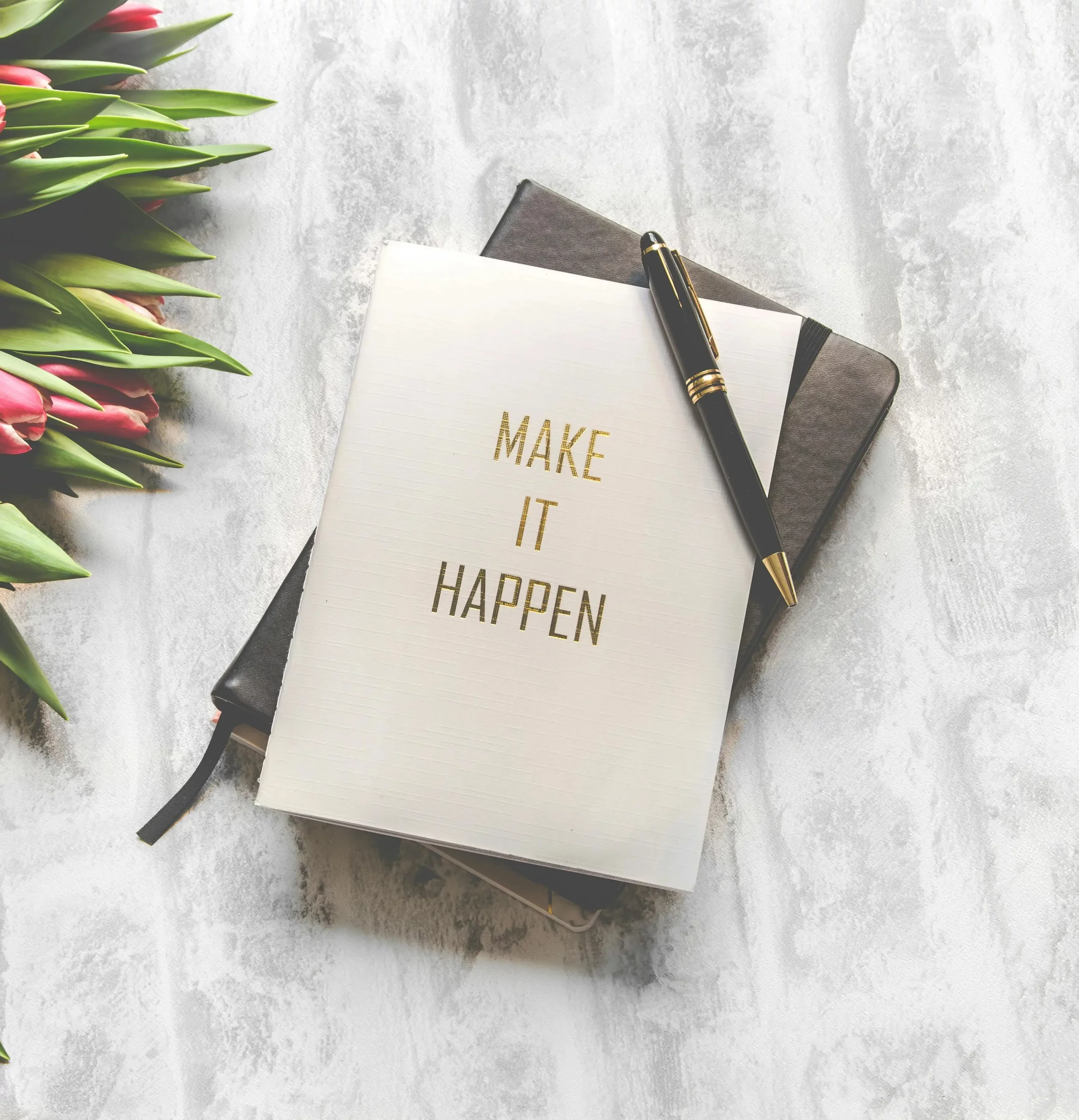
A notepad cover is a protective case or sleeve that wraps around your notebook. It might be built into a hardback design or act as a removable accessory. Covers are available in a variety of materials, such as leather, PU leather, canvas, cork, felt and plastic. Their main role is to preserve your notepad, but they often offer useful features like pen holders, card slots or refillable inserts.
They range from simple and functional to decorative or professional-looking, allowing users to balance practicality with personal style.
Benefits of Using a Notepad Cover
There are several reasons why adding a cover to your notepad can be worthwhile, particularly for those who use their notebooks regularly or on the move.
Key advantages include:
- Protection: Helps prevent damage from spills, scuffs, creases or bent pages, especially when carried in a bag.
- Smart appearance: Adds a neat, professional touch to your daily writing essentials.
- Functionality: Many covers include pen loops, zipped pockets or document holders for added convenience.
- Reusable design: Refillable covers let you replace the notepad inside without discarding the outer shell, which is cost-effective and reduces waste.
- Customisation: Available in many colours, textures and patterns to match your personal or work style.
Downsides of Using a Notepad Cover
While there are plenty of benefits, notepad covers are not ideal for everyone. Here are a few drawbacks to keep in mind:
- Extra weight and bulk: A cover can make your notepad heavier and thicker, which may be inconvenient for those who prefer a minimal setup.
- Higher cost: Premium materials such as leather or eco-friendly fabrics often come with a higher price tag.
- Limited need: If your notepad stays on a desk at home or work, a cover might not add much value.
- Environmental impact: Some synthetic covers may not be recyclable or sustainably produced.
How to Choose the Right Notepad Cover
The best notepad cover for you depends on how and where you use your notebook. Consider the following factors before buying:
- Purpose: Do you use your notepad for meetings, personal journaling, study sessions or sketching?
- Notebook size: Make sure the cover fits your preferred notepad size, such as A6, A5 or DL custom notebooks.
- Material type:
- PU leather: Durable and smart-looking, suitable for business settings.
- Felt or canvas: Lightweight and often made from recycled fibres.
- Cork or recycled paper: A sustainable and natural alternative.
- Useful features: Look out for extras like pen loops, zip compartments or document sleeves.
- Design preference: Choose from minimalist, bold or vintage styles, depending on your taste.
To learn more about notebook styles, take a look at this article: The Anatomy of a Perfect Notepad: Paper, Binding, Size & More
Best Options for Professionals, Students and Creatives
Different users have different priorities when it comes to notepad accessories:
- Professionals: Often choose sleek leather or PU covers that look refined and offer storage for meeting notes, pens and business cards.
- Students: Tend to prefer lightweight, affordable covers that protect their notes and fit easily into a backpack.
- Creatives: May go for flexible or refillable covers that work well for sketching, drafting or mixed media.
Understanding your specific needs and environment will help you find the most suitable option.

Are Notepad Covers Worth It?
Whether or not a notepad cover is worth it depends on your habits and preferences.
You may benefit from a cover if:
- You carry your notepad daily and want to keep it protected.
- You attend professional meetings or presentations.
- You prefer to keep pens, papers and cards in one organised place.
You might not need one if:
- Your notepad rarely leaves your home or desk.
- You value a compact, no-frills writing experience.
- You frequently replace notebooks and want to keep things low-cost.
Budget-friendly alternatives include DIY options, such as repurposing folders or using an old case for protection without added expense.
Learn more about how personalised notebooks can be a significantly helpful tool: Top 10 Uses for Personalised Notepads in the Office
Final Thoughts
A notepad cover can offer practicality and style, helping you protect your notes and stay organised on the go. From everyday students to professionals and creatives, there’s no one-size-fits-all answer. What matters most is how you use your notepad and what features make a difference to you.
Think about your daily routine, then decide whether a cover fits your needs. If you’re unsure, start with a basic option and see how it works for you.
Printed notepads not looking right? Learn more.